
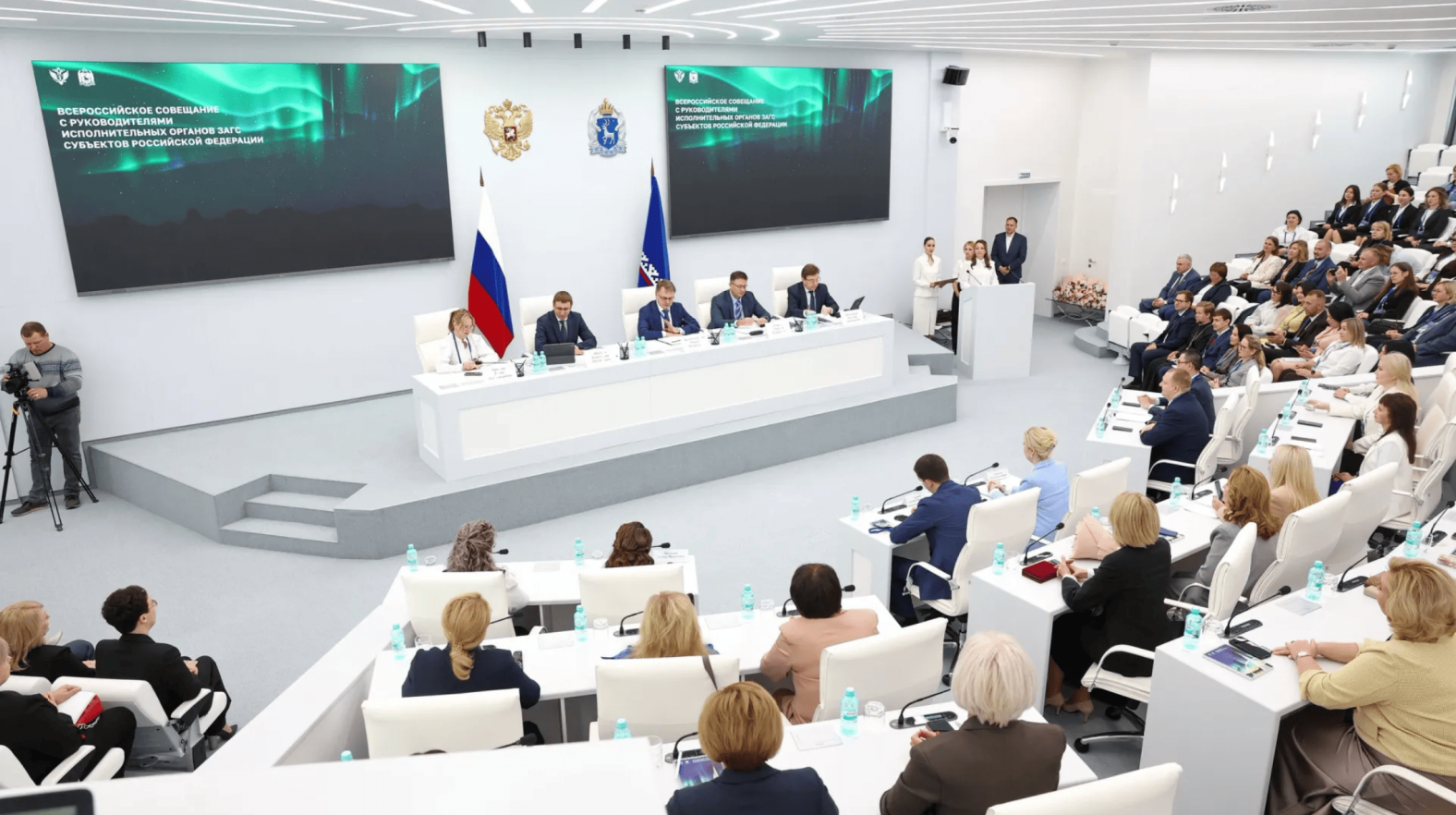
Photo source: Yamal-Media
The All-Russian Meeting of Civil Registry Offices (ZAGS) will take place in Kazan from October 5 to 9, 2026. Among the participants will be leaders from the Ministry of Justice of the Russian Federation, the Ministry of Finance of the Russian Federation, and the Federal Tax Service, as well as heads of civil registry offices from all 89 constituent entities of the Russian Federation.
About the meeting
The Ministry of Justice of the Russian Federation holds an annual All-Russian meeting for the heads of civil registry offices in various constituent entities of the Russian Federation. Since 2012, these meetings have been held in St. Petersburg, Krasnogorsk, Voronezh, Yekaterinburg, Nizhny Novgorod, Ufa, Kaliningrad, and Salekhard.
The goal of the All-Russian meeting is to enhance the effectiveness of cooperation among civil registry offices across the constituent entities of the Russian Federation, strengthen the methodological foundations of their operations, and disseminate best practices from regional civil registry offices.
The first day of the event features a plenary session where representatives of federal authorities and heads of civil registry offices report on the sector’s development, review the year’s results regarding the state registration of civil status acts, and outline priorities for the coming year.
The second day features strategic sessions aimed at aligning Civil Registry Office operations with demographic and digital objectives – specifically, enhancing a customer-centric approach. The goal is to develop unified strategies for modernising operations, implementing digital technologies and interagency cooperation, and strengthening the managerial skills of leadership. These sessions help shift the focus of civil registry offices from purely administrative registration tasks to an active role in the social sphere of the regions.